Mostrando entradas con la etiqueta diabetes. Mostrar todas las entradas

lunes, 19 de noviembre de 2018

La diabetes se apodera de una ciudad mexicana donde la Coca-Cola sustituye al agua


La mortalidad a causa de la diabetes aumentó un 30% en Chiapas entre 2013 y 2016.
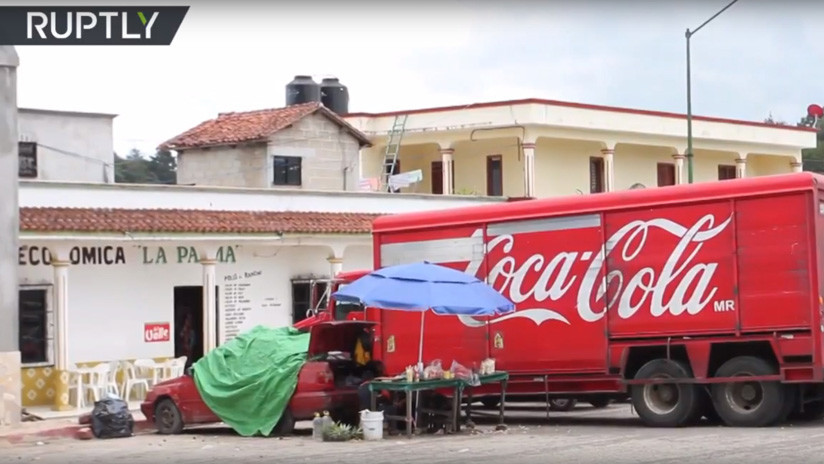
La escasez de agua potable ha obligado a los vecinos de la ciudad mexicana de San Cristobal de las Casas, en el estado de Chiapas, a saciar su sed bebiendo más de dos litros diarios de Coca-Cola, lo que ha disparado enfermedades como la diabetes y la obesidad. 
Mientras la mortalidad a causa de la diabetesaumentó un 30% en Chiapas entre 2013 y 2016, para muchas personas en esta zona de México es más fácil y prácticamente igual de baratoconseguir un refresco azucarado que una botella de agua. 
La población indígena Tzotzil se encuentra entre las más afectadas y, según el jefe del Departamento de Nutrición del Hospital de San Cristóbal de las Casas, Luis Alberto Ferrera, cinco de cada diez consumen refrescos a diario, lo que ha desencadenado altas tasas de obesidad y diabetes.
Coca-Cola produce en una planta embotelladora local, Femsa, y vende la bebida por todo el país. Un acuerdo con el Gobierno mexicano permite a esta planta extraer más de un millón de litros de agua al día. 
Margarita Gutiérrez, directora de Cambio Sistémico e Incidencia Política de la Fundación Cántaro Azul, sostiene que al no proveer el Estado agua segura, la compañía de refrescos se aprovecha de este vacío, ya que "la gente necesita agua o algo que tomar"
La experta destaca que además de que los indígenas no tienen otras opciones de consumo de agua, tampoco cuentan con información para decidir. "Nos saben que la Coca les causa diabetes, obesidad, se desgastan los dientes", afirma.
El refresco, dice Gutiérrez, llegó además en un contexto muy oportuno porque "la gente adoptó la Coca-Cola de una manera fortísima; la introdujo y la adoptó a su cultura".
Mística y moneda de cambio
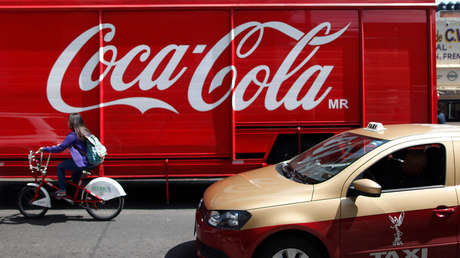
La bebida está tan presente entre los habitantes de San Cristóbal de las Casas –adorna farmacias, restaurantes y hasta las entradas de los pueblos– que incluso se usa como ofrenda en ritos religiosos y como moneda de cambio.
"Coca-Cola es una ofrenda para el trabajo diario y una ofrenda a Dios", sentencia María López, una curandera indígena con base en Chiapas, que compara el refresco con el 'pox', una bebida maya hecha con caña de azúcar. 
Rigoberto Alfaro, profesor de Ciencias Sociales en la Universidad Autónoma de Chiapas, comenta que "con la llegada de la Coca-Cola en botellas de vidrio, las comunidades (indígenas) lo vieron como algo místico, no solo por su forma sino también por su sabor", y apunta que la población indígena la ha adoptado "como si fuera algo de los dioses, una bebida mágica".
Alfaro asegura que Coca-Cola ha realizado una estrategia comercial muy interesante: en la ciudad, el coste de una Coca-Cola tiene un valor, pero en las zonas rurales es más barata. Si una persona no tiene dinero, puede usar el refresco como moneda de cambio
"Cuando la gente tiene que ofrecer una dote a una persona joven, se la dan en dinero o en su equivalente en botella de Coca-Cola", afirma el profesor.
¿Qué dice Coca-Cola?
En un comunicado de prensa publicado en su página web en julio, la compañía de refrescos asegura conocer los desafíos a los que se enfrenta la comunidad de San Cristóbal y dice que han estado "trabajando con ellos durante casi una década para proporcionar tanques de agua comunitarios, recolectores de agua y proyectos de conservación del agua para ayudar a abordar este problema".
Según la compañía, su planta embotelladora paga una tasa de mercado establecida y regulada por el Gobierno mexicano y basada en el uso de agua en Chiapas. "No importa dónde operemos. Evaluamos constantemente la sostenibilidad de nuestro uso del agua y asegurándonos de que nuestro negocio no interfiera con las necesidades de las comunidades locales".

viernes, 20 de julio de 2018

Cáncer, diabetes o hipertensión: Estudio mexicano revela los peligros de consumir bebidas azucaradas


La Universidad Autónoma de México (UNAM) publicó un informe luego de varios años de investigación y advirtió sobre los peligros del síndrome metabólico.

El Instituto de Fisiología Celular (IFC) de la Universidad Nacional Autónoma de México (UNAM) reveló que el consumo de bebidas azucaradas "promueve el síndrome metabólico (SM)". De acuerdo al comunicado de prensa difundido por la institución, el SM se define como "una serie de signos que aumentan la probabilidad de padecer enfermedades cardiovasculares, diabetes tipo 2 y algunos tipos de cáncer".

Para detectar este síndrome se toman en consideración distintos signos: obesidad central, presión arterial alta, aumento de triglicéridos en sangre, colesterol aumentado, secreción excesiva de insulina, resistencia a esta hormona e intolerancia a la glucosa. La existencia de tres o más de estos signos supone SM.

En este sentido cabe recordar que, tal como informó el Observatorio Mexicano de Enfermedades No Transmisibles (OMENT), el país azteca ocupa el segundo lugar en obesidad en adultos dentro de la Organización para la Cooperación y el Desarrollo Económico (OCDE).

La investigación

La doctora Marcia Hiriart Urdanivia, directora del IFC, contó que para realizar el estudio hicieron pruebas con ratas a las que les dieron de beber refrescos azucarados. Tras dos meses sometidos a este régimen, los roedores presentaron aumento de la grasa abdominal, triglicéridos, insulina, resistencia a la misma e intolerancia a la glucosa. Todos los signos del SM.

La investigadora explicó que con este experimento apuntaron a saber qué ocurre con las células beta –encargadas de sintetizar y segregar la insulina– en la inflamación crónica. Esta última es generada por la grasa abdominal que produce adipocinas y glóbulos blancos que producen citocinas.

La diabetes tipo 2 aparece cuando las células beta han sido estimuladas en exceso durante mucho tiempo y se agotan, lo que las vuelve incapaces de producir suficiente insulina imposibilitando mantener la concentración de glucosa en niveles normales.

"Lo más importante es que el síndrome metabólico se puede revertir si hacemos ejercicio y mantenemos una dieta adecuada, evitando así que se desarrolle diabetes tipo 2, enfermedades cardiovasculares y algunos tipos de cáncer", apuntó Urdanivia.

Políticas públicas

De acuerdo a la Encuesta Nacional de Salud y Nutrición (ENSANUT) de 2016, también citadapor OMENT, en México el sobrepeso impacta en todas las edades. Entre los 5 y los 11 años lo padecen 3 de cada 10 personas; entre los 12 y 19 el número ascienda a 4 cada 10; y en los mayores de 20 se dispara abarcando a un 70% de la población.

Frente a ese escenario –que se sostiene hace varios años– el Estado mexicano impuso, en enero de 2014, el Impuesto Especial sobre Producción y Servicios (IEPS) del 10% para las bebidas azucaradas. Tal como recordó el portal Sin Embargo, durante el primer año que estuvo vigente el IEPS, la compra de este tipo de productos cayó un 6% y se incrementó en un 4% la venta de agua mineral.

No obstante, los especialistas sostienen que esto es insuficiente. Fiorella Espinosa de Cándido, investigadora en salud alimentaria de la ONG El Poder del Consumidor, dijo al mismo medio que "no es suficiente un impuesto" y lo que se requiere es "una política integral que genere una transición de esta alimentación inadecuada que está teniendo la población a una más saludable a base de alimentos frescos y nutritivos".

lunes, 22 de enero de 2018

La contaminación de Ciudad de México y las bebidas azucaradas causan daños neurodegenerativos


Reuters Edgard Garrido

Una investigación de la UNAM sugiere que la altura a la que se sitúa la capital y las costumbres de sus habitantes dañan la memoria y el aprendizaje.

Daños en el páncreas y los riñones son algunas de las consecuencias que provocan la contaminación y el consumo de bebidas azucaradas, según unainvestigación realizada por la Universidad Nacional Autónoma de México (UNAM). El estudio fue realizado por Teresa Fortoul y Adriana González Villalba, del Departamento de Biología Celular y Tisular de la Facultad de Medicina, respectivamente.

El resultado que arroja la investigación es que debido a la quema de combustibles cuyo origen es el petróleo, la concentración de metales -como el vanadio- en esas estructuras metabólicas aumentó con el tiempo. Pero el estudio halló también que el consumo de bebidas azucaradas empeora su efecto dañino. Esta combinación afecta a las neuronas del hipocampo, lo que podría dañar la memoria y el aprendizaje, y aumentar el riesgo de padecer alguna enfermedad neurodegenerativa en el futuro".

#BoletínUNAM Combinación de contaminación ambiental y bebidas azucaradas ocasiona daños en el organismo > https://t.co/toJA319p3p pic.twitter.com/xUAsyV8zmv

— Sala de Prensa UNAM (@SalaPrensaUNAM) 14 de enero de 2018


La altura a la que se encuentra la capital mexicana –2.250 metros sobre el nivel del mar– representa un factor maligno: propicia que la combustión incompleta de los motores de los vehículos que circulan libere a la atmósfera partículas con vanadio que, combinadas con el consumo de bebidas azucaradas, producen alteraciones también en el perfil lipídico y en la glucosa en sangre.

El grupo más vulnerable para presentar acumulación de vanadio es el de los niños y ancianosOtro grupo vulnerable es el integrado por quienes padecen problemas metabólicos

Muertes por contaminación, mayores que las relacionadas con guerras

Diversas investigaciones han demostrado lo dañino que puede ser para la salud la contaminación ambiental.

Un informe que publicó la revista Lancet en octubre pasado indicó que las enfermedades provocadas por la contaminación causan un número de muertes 15 veces mayor que la mortalidad relacionada con los conflictos bélicos.

Además, según un reporte de la Revista de la Sociedad de Endocrinología de noviembre pasado, consumir dos latas de gaseosa a la semana incrementa el riesgo de sufrir diabetes, hipertensión y enfermedades del corazón, entre otros.

sábado, 4 de noviembre de 2017

"Dos latas de gaseosa a la semana son suficientes para causar diabetes y enfermedades del corazón"


www.globallookpress.com uwe umstätter

Un estudio científico sintetizó decenas de investigaciones sobre el efecto nocivo de las bebidas azucaradas.

El consumo de apenas dos latas de gaseosa a la semana es suficiente para incrementar el riesgo de sufrir diabetes, hipertensión, enfermedades del corazón y accidentes cerebrovasculares, según un nuevo estudio científico publicado en la Revista de la Sociedad de Endocrinología.  

La investigación, liderada por el profesor Faadiel Essop de la Universidad de Stellenbosch (Sudáfrica), se basó en el análisis de 36 estudios académicos de la última década sobre la salud de personas que tomaron más de cinco bebidas azucaradas por semana.

En ese sentido, se encontró suficiente evidencia sobre el vínculo entre la ingesta de gaseosa con el aumento de peso, así como el desarrollo del síndrome metabólico y de diabetes tipo 2. Asimismo, el consumo excesivo de estas bebidas también está asociado con niveles peligrosos de grasas (triglicéridos) y azúcar en la sangre, como con la reducción del colesterol 'bueno', según recoge Daily Mail.

Imagen ilustrativa

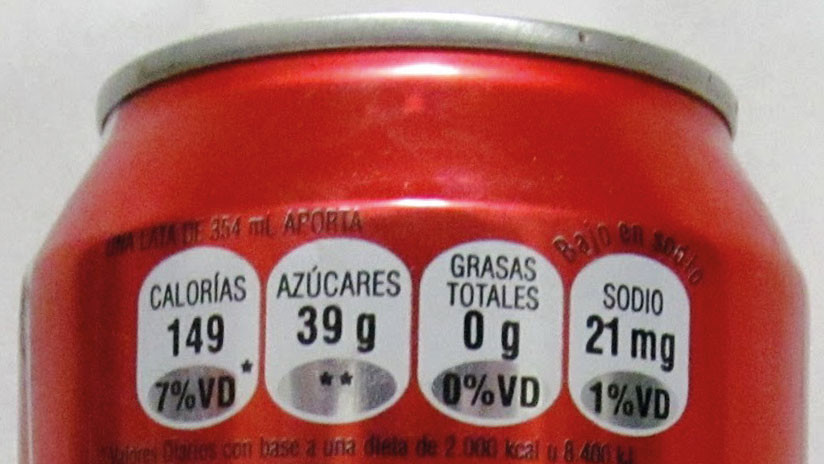
Una lata de Coca Cola de 354 mililitros contiene 149 calorías y 39 gramos de azúcar. Mientras que la dosis diaria de azúcar que un adulto promedio debería injerir es de 25 gramos. Es decir, que el consumo de una lata de esa bebida constituye el 156 % de la norma recomendada.

Según datos de la Organización Mundial de la Salud (OMS), al menos 19 millones de personas mueren cada año a causa de desórdenes cardiometabólicos, cuyo riesgo está directamente relacionado con factores dietarios.

El consumo de gaseosa "aumenta de manera estable entre todos los grupos etarios a nivel mundial", asegura el profesor Essop y agrega que los resultados de su estudio "demuestran que hay una clara necesidad de educación pública sobre los efectos nocivos acarreados por el consumo excesivo de bebidas azucaradas".

sábado, 11 de marzo de 2017

Coca Cola High Sugar Level Causes Diabetes

Each day 1.8 billion bottles of Coca cola are sold making it the most common cold drink brand in the world. But do you know how harmful it is for your health?

The unhealthiest aspect of coca cola is the high level of sugar it contains. Each 250 ml bottle of coca-cola contains 5 tablespoon of sugar which is far above normal for a drink.

Many people think that 5 tablespoon of sugar is normal but the maximum amount of sugar that a man can intake daily is 9 tablespoons. So drinking one bottle of coke means consuming 60% of your daily sugar quota.

Also Read: Coca Cola & Pepsi Contains Alcohol

Your biscuits, tea, snacks all contain sugar, so how can anyone remain under the prescribe amount of sugar while drinking cold drinks? To be honest it is not possible.

viernes, 16 de diciembre de 2016

Sugar tax on soft drinks could prevent tens of thousands from becoming obese, says new study

A sugar tax on soft drinks could result in thousands fewer British adults and children becoming obese, research suggests.

Experts said the proposed levy, due to be introduced in April 2018, was likely to have a “significant” impact on health and obesity rates.

The industry tax relates to the sugar content of drinks, with a higher amount charged for the most sugary beverages.

Researchers modelled three ways that the soft drinks industry might respond to the levy - reducing the sugar content of drinks, raising the price of sugary drinks, and encouraging customers to switch to drinks containing less sugar.

For each scenario they estimated the likely effect on rates of obesity, diabetes and tooth decay.

The study found that a 30 per cent reduction in the sugar content of all high-sugar drinks - a step already taken by some manufacturers - and a 15 per cent reduction for moderately sugary drinks could result in 144,000 fewer adults and children being obese.

Such a step would also lead to 19,000 fewer new cases of Type 2 diabetes each year, and a yearly reduction of 269,000 teeth affected by decay.

Passing on half of the cost of the levy to consumers, leading to a 20 per cent increase in the price of high and mid-sugar drinks, was predicted to reduce the number of obese adults and children by 81,600, cases of diabetes by 10,800, and decaying teeth by 149,000.

Dr Adam Briggs, from Oxford University, who led the research published in The Lancet Public Health journal, said: “Our study provides the first estimates of the likely health impact of the UK soft drinks levy.

“The good news is that our study suggests that all of the most likely industry responses to the tax including reducing sugar content of soft drinks, raising prices of high-sugar drinks and increasing the market share of low-sugar drinks have the potential to improve health by reducing rates of obesity, diabetes and tooth decay.

“The extent of the health benefits of the tax will depend on industry's response.

“We must therefore be vigilant to ensure the food industry acts to remove sugar from soft drinks, and that where the tax is passed on to consumers it increases the price of targeted products only - drinks with high levels of sugar.”

Oxford colleague and co-author Professor Susan Jebb said: “In spite of the uncertainties, the direction of the effect is clear; this levy will have a positive impact, especially on children's health.

“Of course, on its own a soft drinks levy cannot solve the obesity crisis, but we should not underestimate the importance of this step, both for the UK and as a case study for other parts of the world.”

Professor Richard Tiffin, another member of the team from the University of Reading, said it was significant that children would benefit most.

He added: “Childhood obesity is a ticking time bomb and we must now turn our attention to other measures that will bring about the step change in diet that is necessary to truly tackle this issue.

“We need a much better understanding of the diverse and complex reasons people choose a poor diet.”

Nutrition expert Professor Tom Sanders, from King's College London, said he found some of the claims made by researchers “hard to swallow”.

He pointed out that according to the study findings, the proposed tax would reduce energy intake by five calories per person per day, or a third of a teaspoonful of sugar.

“This is a very small reduction in energy intake - equivalent to the amount of energy expended by one minute of brisk walking,” he said.

Other experts called the research “important” and “encouraging”.

Professor Neena Modi, president of the Royal College of Paediatrics and Child Health (RCPCH), said: “Children stand to benefit the most, so this study is a clarion call to industry to fulfil their moral obligations to promote child wellbeing.

“We also reiterate the importance of evaluating the true impact of the sugar tax, once it is introduced, so that the UK can provide much needed evidence to other countries that are considering emulating this potentially powerful public health intervention.”

A Government spokesman said: “This is independent confirmation that the soft drinks industry levy, a key part of our world-leading Childhood Obesity Plan, will be a potent tool in the fight against childhood obesity.

“Not only that, it will help save our children's teeth and cut rates of type 2 diabetes.”

martes, 1 de noviembre de 2016

Among published studies that found that sugary beverage consumption is linked to higher rates of obesity and diabetes, fewer than 3% were underwritten by the sugar-sweetened beverage industry

That is the probability that a published study that finds no link between sugar-sweetened beverage consumption and poorer metabolic health was underwritten by the makers of sugar-sweetened beverages, or authored by researchers with financial ties to that industry.

Compare that figure with 2.9%. Among published studies that found that sugary beverage consumption is linked to higher rates of obesity and diabetes, fewer than 3% were underwritten by the sugar-sweetened beverage industry or authored by researchers who receive money from them.

That stark mismatch is revealed in an analysis of the last 15 years’ worth of experimental research studies that explored the health effects of sugary soda consumption. The review, published Monday in the Annals of Internal Medicine, was conducted by a team of researchers at UC San Francisco.

The group's findings led them to an equally stark conclusion:

“This industry,” they wrote, referring to companies that market sugar-sweetened beverages, “seems to be manipulating contemporary scientific processes to create controversy and advance their business interests at the expense of the public's health.”

This industry seems to be manipulating contemporary scientific processes to ... advance their business interests at the expense of the public's health.

The controversy over the health effects of sugary drink consumption appears to be very real: Of the 60 experimental studies included in the new analysis, 26 articles — 43% failed to uncover any link between sweetened soda drinking and either obesity or metabolic dysfunction. While the remaining 34 articles — about 57% — did find higher rates of those health problems and consumption of sugary drinks, the scientific evidence would suggest it’s a toss-up.

But to suggest that scientific conclusions cannot be influenced by financial interests would be wrong, say the authors. Nudged by a sponsor, or simply mindful of a financial supporter’s concerns, a researcher with financial ties to an industry affected by his or her research could make many subtle decisions about data that can skew outcomes.

“It’s way too simple to say that companies buy the results they want,” New York University food researcher Marion Nestlesaid Monday. But, she added, “there is something about funding that leads — almost certainly unconsciously and unwittingly — to skewing studies to get the desired results.This is not hard to do.”

She says it has been shown in studies in which pharmaceutical companies fund clinical trials of drugs they make.

The take-home message, says Nestle: “If you read research that favors surprising food products, ask who funded it.” If industry-funded, it needs “even more skepticism than is usual.”

Worldwide, beverage companies sell between $200 billion and $800 billion worth of products a year, about 65% of which is sweetened with sugar or high-fructose corn syrup, Nestle reports in her book “Soda Politics: Taking on Big Soda (and Winning).” Both directly and through their industry group, the American Beverage Assn., beverage giants such as Coca-Cola, PepsiCo, Dr Pepper Snapple give financial support to researchers and nutritionists across the United States.

They have a substantial stake in the outcome of research that explores the relationship between a worldwide run-up in obesity and diabetes and increases in consumption of their products.

In a statement issued Monday, the American Beverage Assn. said “we too want a strong, healthy America,” adding, “we have a right – and a responsibility – to engage in scientific research.”

“The research we fund adheres to the highest standards of integrity for scientific inquiry based on recognized standards by prominent research institutions,” the association said. “It contributes to the body of scientific knowledge, meets the needs of regulatory agencies and enables consumers to make informed decisions.”

The new analysis appears to be the first ever to rigorously explore the relationship between beverage industry financial ties and the findings of clinical research on sugar-sweetened soda consumption.

To gauge the effect of industry ties on research findings, the group considered 60 experimental studies that set out to explore whether the consumption of sugary drinks increased the incidence of obesity or metabolic dysfunction, including type-2 diabetes. They ruled out studies that were funded by commercial competitors that do not produce sugar-sweetened beverages (such as companies that bottle water only).

Led by Dr. Dean Schillinger, the UC San Francisco group considered only studies that explored the link between drink consumption and metabolic problems experimentally — by comparing the outcomes of participants who did not consume sugar-sweetened beverages with those who did.

In some of those 60 studies, comparison groups would have been created by researchers who assigned subjects randomly to one “experimental condition” or another. In other studies included in the analysis, researchers took advantage of existing databases that allowed the comparison of people who chose to consume sugar-sweetened beverages with those who did not.

Just over half of the studies considered in the newly published analysis were “meta-analyses” of such experimental studies. Essentially, such studies aggregate the findings of many experiments to reach a conclusion.

These studies are thought to have strengths as well as weaknesses. Because they rely on many smaller studies conducted under widely different circumstances, meta-analyses are often discounted by researchers. At the same time, meta-analyses that show strong convergence on a given finding can help distill scientific consensus, precisely because they demonstrate that studies conducted differently have reached similar conclusions.

In a letter published Monday, Schillinger and his team caution that industry sponsorship of research and of researchers is likely influencing the dietary advice that Americans get along a wide front. In laying the scientific foundation for the drafting of U.S. “Dietary Guidelines” every five years, theU.S. Department of Agriculture does not specifically consider industry funding of research as a source of bias, they write.

In its statement Monday, the ABA noted that Dr. Schillinger, the study’s lead author, is a paid expert in a lawsuit brought against San Francisco by the beverage industry in July. Citing infringement of the industry’s 1st Amendment rights, that lawsuit seeks to prevent implementation of a new San Francisco ordnance that would require health warnings on ads for sugar-sweetened beverages that appear on buses, billboards and city property.

“It’s ironic that he would write about bias in research when he himself is clearly not an impartial researcher,” the ABA said. “This paper is the latest in a trend of pro-tax forces writing speculative opinion papers to influence voters a week before a vote on several ballot initiatives to tax beverages.”