Mostrando entradas con la etiqueta Sugar. Mostrar todas las entradas

miércoles, 2 de mayo de 2018

El impuesto al azucar en las bebidas a base de agua y jugo (Irlanda)

Se ha hablado durante años, y ahora el impuesto sobre el azúcar finalmente está aquí.

Las bebidas a base de agua y jugo que contienen más de 5 gramos de azúcar por 100 mililitros ahora son responsables del impuesto sobre las bebidas azucaradas.

Las bebidas que contienen entre 5 y 8 g de azúcar tendrán un costo adicional de 20 centavos por litro.

Si hay más de 8 g, el impuesto será de 30 c por litro.

Las bebidas que se verán afectadas incluyen aguas saborizadas, aguas carbonatadas, bebidas energéticas y deportivas y bebidas a base de jugo.

Algunos productos concentrados que requieren la adición de agua antes del consumo, tales como los cordiales, las calabazas envasadas y los jarabes con sabor también son responsables del impuesto.

Los jugos de fruta puros no costarán más, a menos que se agregue azúcar, empujando todo el contenido de azúcar por encima del umbral.

Marcas como Coca-Cola Classic, Pepsi, Club Orange, Red Bull y Monster costarán más, aunque la dieta y las versiones con bajo contenido de azúcar no se verán afectadas.

Los productos lácteos están fuera del alcance del impuesto sobre la base del valor nutricional que ofrecen, como el calcio y la proteína, que son necesarios para una buena salud.

La Irish Heart Foundation, que hizo campaña para el nuevo impuesto, dijo que hoy era el día más significativo en la lucha contra la obesidad infantil en Irlanda.

El jefe de la defensoría, Chris Macey, dijo que la medida era la primera señal de que el Gobierno estaba preparado para tomar medidas drásticas para enfrentar la crisis y que la decisión ya había dado resultado debido a un importante programa de reformulación de los fabricantes para reducir los niveles de azúcar por debajo de los umbrales elegidos. el impuesto.

Si bien el objetivo principal del nuevo impuesto es ayudar a abordar los niveles de obesidad en toda la sociedad, también aumentará algunos ingresos para el Estado.

Sin embargo, cuánto será eso seguirá siendo tema de debate.

El Departamento de Finanzas, Gasto Público y Reforma estima que recaudará € 40 millones en un año completo, pero a medida que los fabricantes de bebidas trabajan para reducir el contenido de azúcar, la cifra caerá.

El Irish Beverage Council, que representa a las compañías de refrescos, se opuso a la introducción del impuesto, pero aceptó que ahora es una realidad.

El Consejo afirma que el 76% de los refrescos vendidos en Irlanda no serán responsables del impuesto ya que las empresas han estado trabajando para reducir el azúcar durante más de 30 años.

Colm Jordan, del Consejo, dijo que se han eliminado 10 mil millones de calorías anualmente entre 2005 y 2012 a través de la reducción voluntaria de azúcar en refrescos.

Dijo que eso equivale a una reducción del 10% en siete años, y que los refrescos representan menos del 3% de la ingesta calórica de Irlanda.

El impuesto operará en el estilo del impuesto especial y los "primeros proveedores" de bebidas imponibles serán responsables de cobrar y pagar el impuesto a los Comisionados de Ingresos.

Los primeros proveedores se definen como aquellos que importan o fabrican tales bebidas y las venden a mayoristas, minoristas o consumidores.

La primera indicación de la cantidad real que recaudará el impuesto sobre el azúcar llegará a fines de julio, la fecha límite para que los proveedores devuelvan los primeros dos meses del impuesto recaudado sobre el azúcar.

jueves, 19 de abril de 2018

SAINSBURY'S has sparked outrage after ditching regular Coke bottles from its meal deals.

SAINSBURY'S has sparked outrage after ditching regular Coke bottles from its meal deals.

The decision to drop the drink from the £3 deals has been blamed on price rises following the new sugar tax.

Supermarket bosses said 500ml bottles of Diet Coke and Coke Zero Sugar would still be included in meal deals.

Shopped have since argued Sainsbury's should have put the price of meal deals up instead of taking the drink out of the deal.

Some said it inconvenienced people who don't want to drink Coke made with sweeteners instead of sugar.

On Twitter, Gary Waites said: "The issue is that I don't want Coke Zero not diet, due to the chemical artificial sweeteners, there is no freedom of choice because of the #sugartax which means lost revenue to @sainsburys as I will go elsewhere for my lunch."

Customer Nynaeve2k tweeted: "I'm allergic to sweeteners. They cause me horrendous, debilitating migraines. I wouldn't mind paying 50p more for the meal deal for a full fat Coke but as it stands, the same food costs around £2 more."

A spokesman for the retailer tweeted that, following the introduction of the sugar tax, the price of Coca-Cola had risen.

The spokesman told The Grocer magazine it was "unable to offer it as part of our meal deal."

She said customers could still buy a 250ml can of Classic Coke, sandwich and snack for under £3, less than the price of a meal deal.

Similar anger was aimed at Tesco's move to offer 375ml bottles of Classic Coke with its £3 meal deals earlier this month.

The UK's biggest supermarket swapped the usual 500ml bottles of Coca-Cola and Pepsi for smaller 375ml ones.

It downsized from the 500ml bottles it had previously offered without changing the promotion price.

The supermarket has made the swap due to the new sugar tax, which means drink firms must pay a tax to the government depending on how sugary their drinks are.

As a result some manufactures have changed their recipes to include less sugar.

More than half of all soft drinks have been changed to lower their sugar content, as the government introduces a new sugar tax to help tackle the UK’s growing obesity crisis.

Under the new rules which come in today, drinks with at least 8g of sugar per 100ml will cost 24p a litre more, falling to 18p for those with 5g to 8g per 100ml.

A spokesman for Coca-Cola Enterprises said pricing was at the discretion of retailers.

He said: "The government, policymakers and health experts have made it clear that they expect to see a price difference between products that contain sugar and those that have a low or zero sugar content."

domingo, 8 de abril de 2018

Sugar tax: There's more to come in the war on obesity


It's not the end, there's more to come. That was the message from ministers with the launch of the soft drinks sugar tax.

There was a clear hint that further anti-obesity policies are not far off. The government seems emboldened to press on with strategies aimed at persuading companies to cut calorie content and to wean consumers off their fast-food habit.

First of all, policymakers may well consider extending the scope of the sugar tax to flavoured milk drinks. They were left out of the scope of the levy when it was first announced in 2016.

But the instigator of the policy, George Osborne, when he was chancellor, now says he wishes he had gone further at the outset and included sugary milk drinks in the tax net. He hinted that current cabinet members should move more rapidly.

Speaking to the BBC's Newsnight, Mr Osborne said: "I was already, before I left office, looking at whether you could extend it to sugar added to milk products like sugary milkshakes. I think it'll be for others to take further steps forward and I would predict those steps will be taken."

In train already is a sugar reformulation plan. This is aimed at products not covered by the soft drinks levy, such as cakes, biscuits and cereals. Manufacturers and retailers have reached agreement with health officials to cut sugar content of these food items by 20% over four years with a 5% reduction in the first year. They can do it either by introducing new recipes or cutting portion sizes.

Public Health England says the results from the first year of this sugar reduction plan are due to be published in May. A stack of market sales data has been assembled and officials are analysing it to work out whether companies in each category are cutting sugar content in line with the target.

It's understood that the sugar content removed by the food and restaurant industries in the first year has fallen short of the required 5%. Better progress has been made apparently by cereal manufacturers than biscuit and chocolate producers. It's a voluntary plan and critics will point out that there are no sanctions for companies which don't hit their targets.

Officials will argue that it's a fair start and the first year was always going to be difficult as the industry changed its production processes to remove sugar. There is optimism that the four-year 20% sugar reduction plan will be successful.

Its going to be a busy year for Public Health England as it has recently launched a calorie-cutting strategy, again involving companies signing up to voluntary targets. This covers pizzas, pies, processed foods and a range of savoury items. The detail has not been worked out and that could yet be a more challenging task than for the sugar plan.

Whitehall is gearing up for a wider child obesity strategy this summer. Theresa May seems to have noted that opposition to the sugar tax has been muted and decided that she can go further than the plan she unveiled in 2016 which was widely criticised as too weak. Back on the agenda are curbs on food advertising during prime time television programmes and restrictions on promotions of high calorie food in supermarkets.

Shoppers, meanwhile, will be getting used to the new sugar tax world. Companies making high sugar drinks will be watching closely to see if their customers are deterred from paying 48p more for a two-litre bottle. Those who have reduced sugar content to come in below the tax threshold will want to find out whether consumers are happy with the new recipes.

Irn-Bru has encountered resistance after moving to a lower sugar version. There have been mutterings on social media that the new version of Ribena does not taste as good as the traditional one.

What will take time is gathering evidence on the impact of these policies. Will they bring down obesity? Will there be unintended consequences? Might any changes in people's health have happened anyway? The debate will continue even though there may not be much data for a while yet.

lunes, 22 de enero de 2018

La contaminación de Ciudad de México y las bebidas azucaradas causan daños neurodegenerativos


Reuters Edgard Garrido

Una investigación de la UNAM sugiere que la altura a la que se sitúa la capital y las costumbres de sus habitantes dañan la memoria y el aprendizaje.

Daños en el páncreas y los riñones son algunas de las consecuencias que provocan la contaminación y el consumo de bebidas azucaradas, según unainvestigación realizada por la Universidad Nacional Autónoma de México (UNAM). El estudio fue realizado por Teresa Fortoul y Adriana González Villalba, del Departamento de Biología Celular y Tisular de la Facultad de Medicina, respectivamente.

El resultado que arroja la investigación es que debido a la quema de combustibles cuyo origen es el petróleo, la concentración de metales -como el vanadio- en esas estructuras metabólicas aumentó con el tiempo. Pero el estudio halló también que el consumo de bebidas azucaradas empeora su efecto dañino. Esta combinación afecta a las neuronas del hipocampo, lo que podría dañar la memoria y el aprendizaje, y aumentar el riesgo de padecer alguna enfermedad neurodegenerativa en el futuro".

#BoletínUNAM Combinación de contaminación ambiental y bebidas azucaradas ocasiona daños en el organismo > https://t.co/toJA319p3p pic.twitter.com/xUAsyV8zmv

— Sala de Prensa UNAM (@SalaPrensaUNAM) 14 de enero de 2018


La altura a la que se encuentra la capital mexicana –2.250 metros sobre el nivel del mar– representa un factor maligno: propicia que la combustión incompleta de los motores de los vehículos que circulan libere a la atmósfera partículas con vanadio que, combinadas con el consumo de bebidas azucaradas, producen alteraciones también en el perfil lipídico y en la glucosa en sangre.

El grupo más vulnerable para presentar acumulación de vanadio es el de los niños y ancianosOtro grupo vulnerable es el integrado por quienes padecen problemas metabólicos

Muertes por contaminación, mayores que las relacionadas con guerras

Diversas investigaciones han demostrado lo dañino que puede ser para la salud la contaminación ambiental.

Un informe que publicó la revista Lancet en octubre pasado indicó que las enfermedades provocadas por la contaminación causan un número de muertes 15 veces mayor que la mortalidad relacionada con los conflictos bélicos.

Además, según un reporte de la Revista de la Sociedad de Endocrinología de noviembre pasado, consumir dos latas de gaseosa a la semana incrementa el riesgo de sufrir diabetes, hipertensión y enfermedades del corazón, entre otros.

miércoles, 27 de diciembre de 2017

Confirmado: La pasión por las gaseosas puede ser una trampa mortal


Pixabay / Lernestorod

Un nuevo análisis de cerca de datos de 250.000 personas ha confirmado lo que muchos ya sospechaban: es mejor evitar los refrescos azucarados.

Las gaseosas como Coca-Cola o Pepsi son causantes de problemas de exceso de peso y de graves formas de obesidad que pueden poner en peligro la salud y la vidade aquellos que sienten pasión por estas bebidas azucaradas. Así lo expone un reciente análisis de datos a gran escala realizado por la Asociación Europea para el Estudio de la Obesidad (EASO, por sus siglas en inglés). 

En el marco de la investigación, los científicos analizaron los resultados de treinta nuevas estudios realizados entre los años 2013 y 2015 que no estaban patrocinados por ninguna compañía de la industria de producción de refrescos. En total, en el trabajo se analizaron los datos de 244.651 participantes, de los cuales el 33% eran de países de Europa, el 17% de países latinoamericanos y el 23% de EE. UU., entre otras naciones.

Practicamente todos (el 93%) de los estudios analizados revelaron un claro vínculo entre el consumo de gaseosas y el sobrepeso y la obesidad.

"Dos latas de gaseosa a la semana son suficientes para causar diabetes y enfermedades del corazón"

"La base de evidencia que asocia las bebidas azucaradas con la obesidad y el sobrepeso en niños y adultos ha crecido sustancialmente en los últimos tres  años", comentó una de las autoras del estudio, la doctora Nathalie Farpour-Lambert, de la Universidad Hospital de Ginebra, Suiza.

Asimismo, los investigadores llamaron a regular por leyel consumo de gaseosas y otras bebidas con azúcar, que pone en riesgo la salud de la población.

"Las políticas de salud pública deberían centrarse en reducir el consumo de bebidas azucaradas y promover opciones alternativas como el agua. Sin embargo, hasta la fecha, las acciones para reducir el consumo de bebidas azucaradas en muchos países son limitadas o inexistentes", concluyó Farpour-Lambert.

sábado, 4 de noviembre de 2017

"Dos latas de gaseosa a la semana son suficientes para causar diabetes y enfermedades del corazón"


www.globallookpress.com uwe umstätter

Un estudio científico sintetizó decenas de investigaciones sobre el efecto nocivo de las bebidas azucaradas.

El consumo de apenas dos latas de gaseosa a la semana es suficiente para incrementar el riesgo de sufrir diabetes, hipertensión, enfermedades del corazón y accidentes cerebrovasculares, según un nuevo estudio científico publicado en la Revista de la Sociedad de Endocrinología.  

La investigación, liderada por el profesor Faadiel Essop de la Universidad de Stellenbosch (Sudáfrica), se basó en el análisis de 36 estudios académicos de la última década sobre la salud de personas que tomaron más de cinco bebidas azucaradas por semana.

En ese sentido, se encontró suficiente evidencia sobre el vínculo entre la ingesta de gaseosa con el aumento de peso, así como el desarrollo del síndrome metabólico y de diabetes tipo 2. Asimismo, el consumo excesivo de estas bebidas también está asociado con niveles peligrosos de grasas (triglicéridos) y azúcar en la sangre, como con la reducción del colesterol 'bueno', según recoge Daily Mail.

Imagen ilustrativa

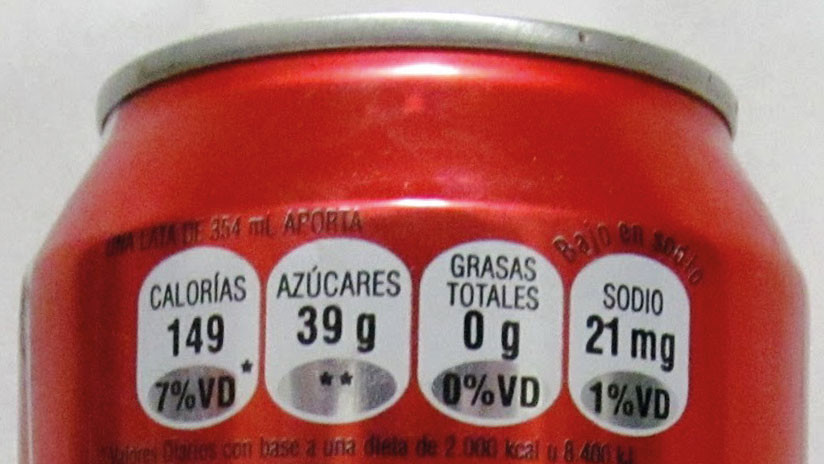
Una lata de Coca Cola de 354 mililitros contiene 149 calorías y 39 gramos de azúcar. Mientras que la dosis diaria de azúcar que un adulto promedio debería injerir es de 25 gramos. Es decir, que el consumo de una lata de esa bebida constituye el 156 % de la norma recomendada.

Según datos de la Organización Mundial de la Salud (OMS), al menos 19 millones de personas mueren cada año a causa de desórdenes cardiometabólicos, cuyo riesgo está directamente relacionado con factores dietarios.

El consumo de gaseosa "aumenta de manera estable entre todos los grupos etarios a nivel mundial", asegura el profesor Essop y agrega que los resultados de su estudio "demuestran que hay una clara necesidad de educación pública sobre los efectos nocivos acarreados por el consumo excesivo de bebidas azucaradas".

martes, 23 de mayo de 2017

Coca-Cola European Partners has launched its largest-ever nationwide sampling campaign, promoting Coca-Cola Zero Sugar.

Coca-Cola European Partners has launched its largest-ever nationwide sampling campaign, promoting Coca-Cola Zero Sugar.

The summer-long push will see more than five million miniature cans handed out in offices, rail stations, Tube stations and shopping centres across Great Britain - with vouchers for a free bottle also distributed.

The activity follows a £14.5m investment to mark the June 2016 launch of Coca-Cola Zero Sugar, the multimillion-pound replacement for the struggling Coke Zero.

The new variant had become "a driving force in the cola category" said Simon Harrison, GB operational marketing director at CCEP. "We are winning consumer preference, and the brand is growing share as a result. Our strategy to encourage more consumers to trial our great-tasting zero sugar variant is building a loyal fan base."

lunes, 24 de abril de 2017

Hospitals in the U.K. to limit sales of sugary drinks

London - The major retailers who operate stores in Britain's biggest hospitals have agreed to 'scale back' (but not to stop completely) the sale of sugary drinks.

Given that hospitals are places where people go to get better and that hospitals are part of the health system, for which health promotion places a key part it is perhaps odd that the stores in hospitals (mainly news shops and small grocery stores) stock-up high with sugary drinks. These are drinks that have an association with obesity, among other ill-health effects (according to the U.S. Centers for Disease Control and Prevention scientific evidence shows that "frequently drinking sugar-sweetened beverages is associated with weight gain/obesity, type 2 diabetes, heart disease, kidney diseases, non-alcoholic liver disease, tooth decay and cavities, and gout, a type of arthritis.")

After many years of campaigning by health promotion groups (including groups within the British government health system, like Public Health England), a consortium of retailers have got round to pledging to limit sales of sugary drinks. This applies to hospitals in England only and does not extent to the other countries of the U.K. The retailers are WHSmith, Marks & Spencer, Subway and Greggs.

Fact check:

Coca cola, the sugar version, for a standard measure (500mL), contains around 200 calories whereas the diet equivalents (Diet Coke or Coke Zero) contain around one calorie.

By April 2018 the retailers have agreed to make sugary drinks no more than 10 percent of the total number of drinks they sell inside hospitals. How this target is to be achieved is not specified, although NHS England has indicated to the BBC that it expects to receive progress reports from the retailers.

READ MORE: Artificial sweeteners linked to stroke and dementia risk

As well as sugary drinks, hospitals must make further efforts, such as:

60 percent of confectionery and sweets stocked do not exceed 250 calories, rising to 80 percent of confectionery and sweets in 2018/19.

60 percent of pre-packed sandwiches and other savory pre-packed meals to contain 400 calories or less per serving and do not exceed five grams of saturated fat per 100 grams, moving to 75 percent in 2018/19.

Commenting on the decision, Katherine Button, who runs the Campaign for Better Hospital Food said: "NHS hospitals are trusted by patients, families and staff to keep them fit and well and NHS England is helping everyone to take a big healthy step in the right direction."

sábado, 22 de abril de 2017

New Coca-Cola Zero Sugar to hit Singapore stores in May

SINGAPORE: Coca-Cola's "improved" recipe for Coke Zero will be available in stores here from May, Coca-Cola Singapore announced on Tuesday (Apr 18).

Continuing to cater to those who want to control their sugar intake, the Coca-Cola Zero Sugar will "taste even more like the original Coca-Cola, but without sugar", according to a press release.

Said Coca-Cola Singapore, Malaysia and Brunei marketing director Tish Condeno: "We know that many people love the taste of the original Coca-Cola.

"We also know that some of them want to reduce their sugar intake but have been reluctant to try a no sugar option because they don't think they taste as good as the original."

The classic Coke contains about nine teaspoons of sugar in a 330ml can.


Coca-Cola's new packaging for three of its products features the 'rising' Red Disc and a splash of signature colours like black and silver. (Photo: Coca-Cola Singapore)

Coca-Cola has also introduced a new streamlined look for the Coca-Cola Classic, Coca-Cola Light and Coca-Cola Zero Sugar.

"The new packaging will feature the 'rising' Red Disc and a splash of the signature colours people know so well - black for Zero and Silver for Light. The new packs will also emphasise the characteristics of each variant, making choice easier and clearer," the press release read.

viernes, 16 de diciembre de 2016

Sugar tax on soft drinks could prevent tens of thousands from becoming obese, says new study

A sugar tax on soft drinks could result in thousands fewer British adults and children becoming obese, research suggests.

Experts said the proposed levy, due to be introduced in April 2018, was likely to have a “significant” impact on health and obesity rates.

The industry tax relates to the sugar content of drinks, with a higher amount charged for the most sugary beverages.

Researchers modelled three ways that the soft drinks industry might respond to the levy - reducing the sugar content of drinks, raising the price of sugary drinks, and encouraging customers to switch to drinks containing less sugar.

For each scenario they estimated the likely effect on rates of obesity, diabetes and tooth decay.

The study found that a 30 per cent reduction in the sugar content of all high-sugar drinks - a step already taken by some manufacturers - and a 15 per cent reduction for moderately sugary drinks could result in 144,000 fewer adults and children being obese.

Such a step would also lead to 19,000 fewer new cases of Type 2 diabetes each year, and a yearly reduction of 269,000 teeth affected by decay.

Passing on half of the cost of the levy to consumers, leading to a 20 per cent increase in the price of high and mid-sugar drinks, was predicted to reduce the number of obese adults and children by 81,600, cases of diabetes by 10,800, and decaying teeth by 149,000.

Dr Adam Briggs, from Oxford University, who led the research published in The Lancet Public Health journal, said: “Our study provides the first estimates of the likely health impact of the UK soft drinks levy.

“The good news is that our study suggests that all of the most likely industry responses to the tax including reducing sugar content of soft drinks, raising prices of high-sugar drinks and increasing the market share of low-sugar drinks have the potential to improve health by reducing rates of obesity, diabetes and tooth decay.

“The extent of the health benefits of the tax will depend on industry's response.

“We must therefore be vigilant to ensure the food industry acts to remove sugar from soft drinks, and that where the tax is passed on to consumers it increases the price of targeted products only - drinks with high levels of sugar.”

Oxford colleague and co-author Professor Susan Jebb said: “In spite of the uncertainties, the direction of the effect is clear; this levy will have a positive impact, especially on children's health.

“Of course, on its own a soft drinks levy cannot solve the obesity crisis, but we should not underestimate the importance of this step, both for the UK and as a case study for other parts of the world.”

Professor Richard Tiffin, another member of the team from the University of Reading, said it was significant that children would benefit most.

He added: “Childhood obesity is a ticking time bomb and we must now turn our attention to other measures that will bring about the step change in diet that is necessary to truly tackle this issue.

“We need a much better understanding of the diverse and complex reasons people choose a poor diet.”

Nutrition expert Professor Tom Sanders, from King's College London, said he found some of the claims made by researchers “hard to swallow”.

He pointed out that according to the study findings, the proposed tax would reduce energy intake by five calories per person per day, or a third of a teaspoonful of sugar.

“This is a very small reduction in energy intake - equivalent to the amount of energy expended by one minute of brisk walking,” he said.

Other experts called the research “important” and “encouraging”.

Professor Neena Modi, president of the Royal College of Paediatrics and Child Health (RCPCH), said: “Children stand to benefit the most, so this study is a clarion call to industry to fulfil their moral obligations to promote child wellbeing.

“We also reiterate the importance of evaluating the true impact of the sugar tax, once it is introduced, so that the UK can provide much needed evidence to other countries that are considering emulating this potentially powerful public health intervention.”

A Government spokesman said: “This is independent confirmation that the soft drinks industry levy, a key part of our world-leading Childhood Obesity Plan, will be a potent tool in the fight against childhood obesity.

“Not only that, it will help save our children's teeth and cut rates of type 2 diabetes.”

miércoles, 9 de noviembre de 2016

San Francisco passes soda tax, other cities on track to approve


San Francisco passes soda tax, other cities on track to approve

City buses travel down a city street in San Francisco, California


Voters in San Francisco, California passed a tax on sugar-sweetened beverages on Tuesday, unofficial results showed, as the push by local governments to target soda to stem obesity and diabetes gathered speed.

San Francisco Bay Area neighbor Albany, California passed a similar measure, preliminary figures showed and measures in Oakland, California and Boulder, Colorado, were on track to pass as well, with votes still being counted early on Wednesday.

The levies on sugar-sweetened beverages arrive a month after the World Health Organization recommended that governments introduce these types of taxes in a bid to battle obesity, diabetes and other diet-related diseases.

ADVERTISEMENT

Opponents of such taxes say they hit lower income populations hardest, and that it is unfair to single out soda in the battle to fight obesity and diabetes.

Coca-Cola Co, PepsiCo Inc and other companies in the roughly $100 billion U.S. soft drink industry are fighting the taxes at a time when soda consumption is falling.

The San Francisco measure passed 62 percent to 38 percent and the Albany measure passed 71 percent to 29 percent. With 85 percent of precincts reporting, the Oakland measure had 62 percent support to 38 percent opposed, and in Boulder the soda tax was passing 54 percent to 46 percent, with the percent of votes counted unclear.

sábado, 5 de noviembre de 2016

Philadelphia and Berkeley, California, are the only U.S. cities that have a so-called "soda tax" on the books.

Philadelphia and Berkeley, California, are the only U.S. cities that have a so-called "soda tax" on the books.

But on Election Day, four more cities will decide whether they want one.

Residents of Boulder, Colorado, and Californians who live in San Francisco, Oakland and Albany will vote on ballot measures calling for a new tax on sugar-sweetened beverages. The Boulder measure calls for a two-cents-per-ounce tax, while the three California cities are calling for a tax of one cent per ounce.

The proposed soda taxes would target not only sodas but sweetened teas, fountain drinks, energy drinks and beverages with sugar added. Some sweet drinks, though, would be exempt. For instance, the tax would not apply to 100% juice products, infant formula, milk products, diet soda and in most cases, alcohol.

Soda tax proponents cite the need to reduce the incidence - especially in children - of diabetes, obesity and other harmful health effects of sugar.

The proposed ordinance in Albany, California, for instance, notes that "a single 20-ounce bottle of soda ... typically contains the equivalent of approximately 16 teaspoons of sugar." Proponents of the measure in Boulder say it contains "22 packets of sugar." In either case, it's a lot.

In addition to reducing sugar-related health problems, a soda tax is also promoted as a way to help bring down the public cost of treating those health problems.

The new soda tax revenue is typically directed into a city's general fund, but at least in Boulder there's a call for it to be used specifically for health initiatives.

Opponents of the soda tax make several arguments. Among them, specialized taxes raise the accounting and administrative burdens on business owners. And even though the soda tax is technically levied on beverage distributors, it is likely to be passed on to consumers by way of higher prices. Plus, low-income consumers, who buy the taxed product more than other groups, are least able to afford higher prices.

The jury is still out on the efficacy of taxing one type of beverage or food to reduce the incidence of diabetes or obesity.

Studies in Mexico, which imposed a soda tax nationwide in 2014, found consumption is down, as has early research in Berkeley, where the soda tax went into effect last year, said Donald Marron, director of economic policy initiatives at the Urban Institute. That alone isn't surprising. "Prices go up, people buy less," Marron said.

The potential health effects of the tax, however, aren't clear yet, he noted. What if consumers choose to substitute sugary beverages that are taxed for high-sugar beverages that are untaxed, such as 100% juice?

There's still debate among health experts as to whether naturally occurring and additive sugars are equally harmful or if additive sugars are worse in causing diabetes and obesity, Marron said.

viernes, 4 de noviembre de 2016

These Cities Are About to Reach a Verdict on the Soda Tax

These Cities Are About to Reach a Verdict on the Soda Tax

Tim Boyle—Getty Images

They’ve become the latest battleground in a so-called “War on Sugar.”

As Americans vote for a new president on Tuesday, hundreds of thousands of voters in California’s Bay Area and Boulder, Colorado, will also decide whether they want levies on sugary drinks, another step toward making soda taxes a norm.

Three cities in California – San Francisco, Berkeley and Albany – and Boulder, Colorado, have become the latest battleground in a so-called “War on Sugar” that centers on sweetened drinks. Over 800,00 voters will decide on ballot measures to introduce taxes of 1 or 2 cents per ounce on soft drinks on Nov. 9, just weeks after the World Health Organization (WHO) advocated that governments should impose these types of levies.

The push for taxes on sugar and sodas has gathered momentum this year, as officials and health advocates seek ways to stem health epidemics of diabetes and obesity. On most ballots, the tax would not apply to diet sodas but does affect some juices, sports drinks and other beverages with added sugar.

Reducing consumption of sugary drinks is seen as a relatively easy way for people to cut down on added sugars, recommended by groups including the WHO, the U.S. Food and Drug Administration (FDA) and the American Heart Association.

The trend has prompted worry and millions of dollars in advertising and lobbying campaigns from beverage industry giants like PepsiCo  PEP -0.15%  and Coca-Cola  KO -0.36%  that are facing declining sales of their flagship products in markets including the United States.

So far this year, Britain and Philadelphia decided to introduce levies on soft drinks and countries including South Africa have proposed similar measures. This follows a decision by Mexico to introduce such a tax in 2014. The broadening of these efforts raises the prospect of establishing them as the norm after numerous previous attempts failed, advocates say.

“The more these taxes pass, the more they will be considered in other jurisdictions,” said Jim O’Hara, health promotion policy director with the Center for Science in the Public Interest in Washington.

SODA ON THE DEFENSIVE

Both Pepsi and Coke are increasing options for less sugary drinks, responding to changing consumer tastes. Consumption of carbonated soft drinks hit a 30-year low in the United States last year, as water sales continued their climb, according to Beverage Digest.

The majority of California voters support government measure to reduce consumption of sugary beverages, according to a Field Poll released in February. In San Francisco, a 2014 vote for a similar tax failed to pass a two-thirds vote, but is expected by many to succeed this time around, as only a simple majority is required. The votes in the other cities are expected by both advocates and opponents alike to be tighter.

Fighting for survival, Big Soda has been outspending advocates of the measure, but not by much. Industry spending to oppose the taxes this year in the Bay Area alone has swelled to around $27 million to $28 million, versus around some $19 million by advocates, according to estimates from both sides.

Billionaires including Michael Bloomberg have joined the fray, contributing $15 million to pro-tax campaigns in the Bay Area. The former mayor of New York waged an unsuccessful campaign in the city to cut soda sizes in 2014.

Opponents say the tax, which would be levied on distributors, is unfairly targeted at drinks makers and could raise food costs beyond just soda.

“In effect, this is a grocery tax. It could be spread out on many items” by distributors, said Joe Arellano, spokesman for the “No Grocery Tax” campaigns in California’s Bay area.

In the California cities, the measures would introduce a penny-per-ounce tax. In Boulder, it would be 2 cents.

martes, 1 de noviembre de 2016

Big Soda-Funded Studies Don’t Often Link Drinks to Obesity

Compared to independent studies, industry-sponsored studies are less likely to link sugary drinks to diseases

Soda Companies Fund 96 Health Groups In the U.S.

Medical organizations, health foundations and government groups recently accepted money from Coca-Cola or Pepsi

When studies are funded by the beverage industry, they are less likely to find a link between sugary drinks and obesity and type 2 diabetes, according to a new report.

A team of researchers from the University of California, San Francisco (UCSF) looked at 60 studies published between 2001 and 2016 that analyzed the link between sugary drinks like soda and obesity and type 2 diabetes. Their research was spurred by legal proceedings between the soda industry and the city of San Francisco, theNew York Times reports. Last year, the city started requiring advertisements for sugary beverages to carry warning labels linking the drinks to diseases like obesity. The beverage industry sued the city and said the labels were misleading and harmed free speech laws. The city hired the author of the new study—Dr. Dean Schillinger of UCSF, who focuses on diabetes—to research the link between sugary drinks and health issues.

During his research, Schillinger found that when studies are funded by the soda industry, they report different findings than studies that are done by independent researchers. In the new report, published in the journal Annals of Internal Medicine, Schillinger and his colleagues report that out of the 60 studies they reviewed, 26 did not find a relationship between sugary drinks and obesity or diabetes, and 34 did report a link. All of the studies that did not link the drinks to disease were funded by the beverage industry. Only one of the studies that did report a link was industry-funded.


“This industry seems to be manipulating contemporary scientific processes to create controversy and advance their business interests at the expense of the public’s health,” the study authors concluded in their report.

This is not the first time the soda or sugar industry has been criticized for interfering with public health. In October, a study published in the American Journal of Preventive Medicine reported that between 2011 to 2015, 96 national health organizations accepted money from Coca-ColaPepsiCo or both companies. In 2015 it was revealed that Coca-Cola funded an organization called the Global Energy Balance Network that tried to shift public health messaging away from a focus on diet and onto exercise.

“The reality is we are in a public health war with diabetes right now,” says Schillinger. “In every war there is propaganda. What the public should take away from [these findings] is that we are being played. If you exclude the studies funded by industry and only look at the independently funded studies, it becomes apparent that sugar-sweetened beverages cause obesity and diabetes.”

In a statement emailed in response to the report, the American Beverage Association said that “we have a right—and a responsibility—to engage in scientific research. The research we fund adheres to the highest standards of integrity for scientific inquiry based on recognized standards by prominent research institutions. It contributes to the body of scientific knowledge, meets the needs of regulatory agencies and enables consumers to make informed decisions.”

The group also stated that Schillinger is paid by the City of San Francisco as part of the lawsuit. “It’s ironic that he would write about bias in research when he himself is clearly not an impartial researcher,” the ABA wrote. “This paper is the latest in a trend of pro-tax forces writing speculative opinion papers to influence voters a week before a vote on several ballot initiatives to tax beverages.”

Schillinger says that the industry’s influence on public health through funding and research isn’t a new revelation, but calls the number of studies in the report “remarkable”. “This is not an opinion perspective,” he says. “Any high school student could do this study. 

You count up the studies and see who funded them. That’s research. That’s fact.”

Among published studies that found that sugary beverage consumption is linked to higher rates of obesity and diabetes, fewer than 3% were underwritten by the sugar-sweetened beverage industry

That is the probability that a published study that finds no link between sugar-sweetened beverage consumption and poorer metabolic health was underwritten by the makers of sugar-sweetened beverages, or authored by researchers with financial ties to that industry.

Compare that figure with 2.9%. Among published studies that found that sugary beverage consumption is linked to higher rates of obesity and diabetes, fewer than 3% were underwritten by the sugar-sweetened beverage industry or authored by researchers who receive money from them.

That stark mismatch is revealed in an analysis of the last 15 years’ worth of experimental research studies that explored the health effects of sugary soda consumption. The review, published Monday in the Annals of Internal Medicine, was conducted by a team of researchers at UC San Francisco.

The group's findings led them to an equally stark conclusion:

“This industry,” they wrote, referring to companies that market sugar-sweetened beverages, “seems to be manipulating contemporary scientific processes to create controversy and advance their business interests at the expense of the public's health.”

This industry seems to be manipulating contemporary scientific processes to ... advance their business interests at the expense of the public's health.

The controversy over the health effects of sugary drink consumption appears to be very real: Of the 60 experimental studies included in the new analysis, 26 articles — 43% failed to uncover any link between sweetened soda drinking and either obesity or metabolic dysfunction. While the remaining 34 articles — about 57% — did find higher rates of those health problems and consumption of sugary drinks, the scientific evidence would suggest it’s a toss-up.

But to suggest that scientific conclusions cannot be influenced by financial interests would be wrong, say the authors. Nudged by a sponsor, or simply mindful of a financial supporter’s concerns, a researcher with financial ties to an industry affected by his or her research could make many subtle decisions about data that can skew outcomes.

“It’s way too simple to say that companies buy the results they want,” New York University food researcher Marion Nestlesaid Monday. But, she added, “there is something about funding that leads — almost certainly unconsciously and unwittingly — to skewing studies to get the desired results.This is not hard to do.”

She says it has been shown in studies in which pharmaceutical companies fund clinical trials of drugs they make.

The take-home message, says Nestle: “If you read research that favors surprising food products, ask who funded it.” If industry-funded, it needs “even more skepticism than is usual.”

Worldwide, beverage companies sell between $200 billion and $800 billion worth of products a year, about 65% of which is sweetened with sugar or high-fructose corn syrup, Nestle reports in her book “Soda Politics: Taking on Big Soda (and Winning).” Both directly and through their industry group, the American Beverage Assn., beverage giants such as Coca-Cola, PepsiCo, Dr Pepper Snapple give financial support to researchers and nutritionists across the United States.

They have a substantial stake in the outcome of research that explores the relationship between a worldwide run-up in obesity and diabetes and increases in consumption of their products.

In a statement issued Monday, the American Beverage Assn. said “we too want a strong, healthy America,” adding, “we have a right – and a responsibility – to engage in scientific research.”

“The research we fund adheres to the highest standards of integrity for scientific inquiry based on recognized standards by prominent research institutions,” the association said. “It contributes to the body of scientific knowledge, meets the needs of regulatory agencies and enables consumers to make informed decisions.”

The new analysis appears to be the first ever to rigorously explore the relationship between beverage industry financial ties and the findings of clinical research on sugar-sweetened soda consumption.

To gauge the effect of industry ties on research findings, the group considered 60 experimental studies that set out to explore whether the consumption of sugary drinks increased the incidence of obesity or metabolic dysfunction, including type-2 diabetes. They ruled out studies that were funded by commercial competitors that do not produce sugar-sweetened beverages (such as companies that bottle water only).

Led by Dr. Dean Schillinger, the UC San Francisco group considered only studies that explored the link between drink consumption and metabolic problems experimentally — by comparing the outcomes of participants who did not consume sugar-sweetened beverages with those who did.

In some of those 60 studies, comparison groups would have been created by researchers who assigned subjects randomly to one “experimental condition” or another. In other studies included in the analysis, researchers took advantage of existing databases that allowed the comparison of people who chose to consume sugar-sweetened beverages with those who did not.

Just over half of the studies considered in the newly published analysis were “meta-analyses” of such experimental studies. Essentially, such studies aggregate the findings of many experiments to reach a conclusion.

These studies are thought to have strengths as well as weaknesses. Because they rely on many smaller studies conducted under widely different circumstances, meta-analyses are often discounted by researchers. At the same time, meta-analyses that show strong convergence on a given finding can help distill scientific consensus, precisely because they demonstrate that studies conducted differently have reached similar conclusions.

In a letter published Monday, Schillinger and his team caution that industry sponsorship of research and of researchers is likely influencing the dietary advice that Americans get along a wide front. In laying the scientific foundation for the drafting of U.S. “Dietary Guidelines” every five years, theU.S. Department of Agriculture does not specifically consider industry funding of research as a source of bias, they write.

In its statement Monday, the ABA noted that Dr. Schillinger, the study’s lead author, is a paid expert in a lawsuit brought against San Francisco by the beverage industry in July. Citing infringement of the industry’s 1st Amendment rights, that lawsuit seeks to prevent implementation of a new San Francisco ordnance that would require health warnings on ads for sugar-sweetened beverages that appear on buses, billboards and city property.

“It’s ironic that he would write about bias in research when he himself is clearly not an impartial researcher,” the ABA said. “This paper is the latest in a trend of pro-tax forces writing speculative opinion papers to influence voters a week before a vote on several ballot initiatives to tax beverages.”