

Mostrando entradas con la etiqueta waste. Mostrar todas las entradas

lunes, 2 de julio de 2018

Can plastic roads curb waste epidemic?


How plastic can be recycled to build roads

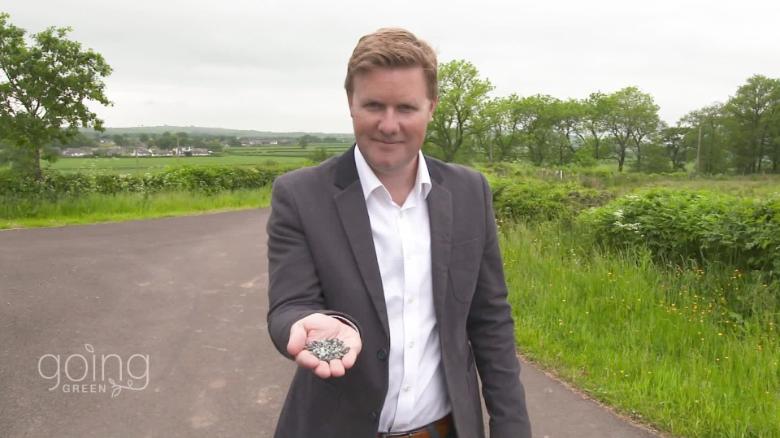
The engineer and his two pals were boiling pot after pot of plastic on the stove. Plastic bottles, diapers, carrier bags -- it was all going in the melting pot.

But McCartney wasn't going mad, he was concocting the perfect recipe for plastic roads.

"We went through about five-to-six hundred different designs of different polymers that we were mixing in before we found one that actually worked," he tells CNN.

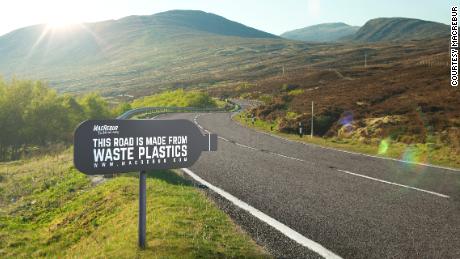
This final recipe of blended waste plasticsis mixed in with ordinary asphalt to create a stronger, longer-lasting road, explains McCartney.

"We are wanting to solve two world problems. On one side we call it the waste plastic epidemic, and on the other side the poor quality of roads that we have to drive on today."

Plastic waste is "pelletized" into small granules and replaces 20% of the sticky, oil-based bitumen that seals traditional roads.

Every ton of asphalt contains approximately 20,000 single-use plastic bottles or around 70,000 single-use plastic bags.

According to McCartney, his plastic additive is more cost effective and makes for a stronger "glue."

McCartney claims his plastic roads are 60% stronger than traditional roads, and lab tests project these roads may last up to three times longer. However, time will be the true test to see if they withstand wear and tear.

To date, McCartney's business, MacRebur Plastic Roads Company, has provided plastic pellets for roads in the United Kingdom and the Gulf, as well as Canada, Australia and New Zealand.


Inspired by India's plastic potholes

McCartney first encountered plastic in roads while traveling in Southern India. There he saw how waste plastics were put into potholes and set alight until they melted into the craters, sealing the potholes.

In fact, India has been using plastic in the construction of roads since the turn of the century, following a process developed by Rajagopalan Vasudevan, a chemistry professor at Thiagarajar College of Engineering in the city of Madurai in the South Indian state of Tamil Nadu.

Vasudevan's process involves scattering shredded plastic over hot stones to form a thin, primer coat. This is then added to bitumen, resulting in a strong bond.

Rajagopalan Vasudevan receives the Padma Shri award from President Ram Nath Kovind in March 2018.

To date, this method has been used on an estimated 100,000 kilometers of roads across India.

In November 2015, the Indian road transport ministry made it mandatory to construct roads using waste plastic in most urban areas.

However, a number of states have yet to begin using plastic in road construction, saying the guideline doesn't concern them, explains Indian environmentalist Almitra Patel.

"Potentially plastic roads will make it possible for a city or state or the whole country for that matter to become zero waste to landfill if one follows the rules, but is a long way from happening," she tells CNN.

Environmental cost?

Both Patel and McCartney are adamant that plastics in roads will not wash back into our rivers and oceans when it rains.

"If the plastic is permanently sandwiched between the stone and bitumen, there's no way it will ever see the environment," says Patel. "It will be ages before enough tar rubs off that you ever reach the plastic layer."

"All our plastics are heated to around 180 degrees," adds McCartney. "They then fully homogenize in, so they mix in with the remaining bitumen in the road... So there is no micro-plastic present in any of our roads."

Furthermore, Patel says PET and PVC plastics are excluded and the process of softening plastic is strictly controlled at a temperature that does not produce harmful fumes. "The point is you're not melting the plastic at any point... so there's no question of anything escaping."

While plastic waste is a mounting issue, McCartney believes the material's properties are perfectly suited for roads.

"At the end of the day plastic is a great product," he says. "It lasts for long, which is a problem if it's a waste product, but not a problem if we want it to last."

jueves, 13 de abril de 2017

Committee urges London mayor to tackle plastic bottle waste

The report found that the capital's population consumes the most plastic bottled water in the country- 7.7bn a year - yet has the UK's worst recycling rate - 32%, compared with a national average of 43%.

Plastic bottles, which take 450 years to break down, make up 10% of all litter found in the Thames, according to the Thames21 waterways group.

The report urges London mayor Sadiq Khan to address the issue of plastic water bottle waste in his upcoming environment strategy. It also recommends that he considers the implementation of a bottle Deposit Return Scheme (DRS).

However, while the likes of Coca Cola have tentatively voiced support for such a scheme, there has been some opposition to DRS as recently reported by Packaging News. Three consumer focus groups and three retailer focus groups were held in England, Scotland and Wales exploring retailers and consumers understanding of a Deposit Return Scheme (DRS) and the impact it would have on their recycling habits and businesses.

It concluded that DRS is too complex, too expensive and too burdensome on customers and small shops.

The news also comes after Skipping Rocks Lab, a firm founded by three London design students, announced its 'mission to make packaging waste disappear,' unveiling its first product - edible capsule for water Ooho!

sábado, 3 de diciembre de 2016

Coca-Cola bottler launches label recycling program


A new initiative from Coca-Cola European Partners (CCEP) will recycle some 70 metric tons of waste each year from the production of Glacéau Smartwater bottle labels.

The new waste-saving initiative at Coca-Cola's Morpeth, United Kingdom, site with waste management company Viridor, labelling and packaging solutions company Avery Dennison, and plastic processor PET UK.

During the production process, self-adhesive labels are carried on a transparent PET liner before being applied to the Smartwater bottles. The liner then previously went into the waste stream.

Now, rather than becoming waste, these liners can now be retained and used to make new products including PET staple fiber, strapping or thermoformable sheets, which can then be used to make trays.

The initiative is expected to reduce the carbon footprint of CCEP’s Morpeth factory by approximately 80-100 tonnes of CO2 per year, which equates to approximately 15 homes’ electricity use over a year.

CCEP’s Morpeth factory is the sole site in the U.K. to produce Glacéau Smartwater, which first launched in 2014. Last month, the factory announced a £14 million ($17.7 million) investment to support the Smartwater brand, with a new high-speed fully automated bottling line, more than doubling production capability to 56,000 bottles per hour compared to the previous line’s capability of 18,200 bottles per hour. This year, the site expects to produce around 90 million bottles.

 Jane Buckley, operations director of CCEP, Morpeth, said: “With the recent site investment in Morpeth considerably increasing production capabilities, it is more important than ever for CCEP to reflect on its waste management as a business.

“This initiative will be an effective step in recycling more of our waste, and working towards our commitment to reducing the carbon footprint of the drink in the consumer’s hand.

“We are very excited to be working with some of the biggest organizations in the packaging and recycling spheres who share our commitment to support the circular economy.”

miércoles, 16 de noviembre de 2016

Avery Dennison helps Coca-Cola recycle 70 tonnes of PET waste annually


Avery Dennison helps Coca-Cola recycle 70 tonnes of PET waste annually


Avery Dennison, in collaboration with partners throughout the supply chain namely Viridor and PET UK, has helped Coca-Cola European Partners (CCEP) to reduce waste, costs, and the carbon footprint of Smartwater production in the UK. Smartwater is a British spring water manufactured by Coca-Cola.

Joe Franses, director of corporate responsibility and sustainability at Coca-Cola European Partners, said, “This example shows how we can turn the crisis of resources into a business opportunity through close collaboration across the value chain. Businesses which can be truly innovative with the products and services they provide, optimising the resources they use and encouraging consumers to do the same, have the potential to transform our economy.”

Xander van der Vlies, sustainability director for Avery Dennison Materials Group Europe, added, “CCEP wanted to further improve Smartwater production in line with its focus on recycling, sustainability and creating a circular economy. Avery Dennison was a natural choice of partner for this project, given our ambitious year-on-year sustainability goals, and the various initiatives we promote around the reduction of waste created in the self-adhesive label value chain. We have close relationships both with PET UK and with CCEP’s waste management company Viridor, and together we have been able to establish a strategy that saves on waste and emissions while at the same time giving CCEP concrete business benefits and cost reductions.”

More than 50 million bottles of Smartwater were produced in 2015. The PET liners used (carrying the self-adhesive labels before dispensing) generated more than 40 tonnes of waste in that year, costing around $10,600 in disposal/handling costs. Under the new recycling scheme, PET UK shreds and extrudes the waste PET liner and then produces a material suitable for making new items such as PET staple fibre, strapping or thermoformable sheets. There will also be significant savings in CO2 emissions – around 180-200 tonnes in 2016.

Noting that creating awareness on PET recycling will continue, Van der Vlies said, “Since we launched this initiative with PET UK in 2014, we have signed up many wine, spirits, beer, and beverage brands. Avery Dennison has set an ambitious sustainability goal for 2025 of eliminating 70 percent of liner waste from the industry value chain.”